


This post is also available in:


Picture this: your first appointment of the morning is a no-show. The clinician waits. The receptionist checks the schedule again. Ten minutes stretch into thirty, and the slot, valuable, billable time, is lost.
Across the week, these moments pile up into hours of wasted potential and thousands in unrealized revenue.
Missed appointments and last-minute cancellations do more than disrupt the day’s rhythm. They ripple through the entire clinic ecosystem, throwing off schedules, straining staff morale, and delaying care for patients who actually need it.


For many practices, it’s not just an operational inconvenience; it’s a measurable hit to productivity and patient satisfaction.
Enter automated reminders. Once a convenient add-on, they’ve become an essential feature of modern clinic scheduling software.
For clinics looking to streamline communication and reduce no-shows, solutions like SimplyBook.me offer fully integrated reminder systems that handle notifications, confirmations, and follow-ups automatically.
This article explores how automation is reshaping medical clinic scheduling, reducing no-shows, lightening administrative workloads, and keeping clinics running with near-clockwork precision.
The Role of Automated Reminders in Modern Clinic Scheduling


Automated Reminders in Clinic Scheduling Software
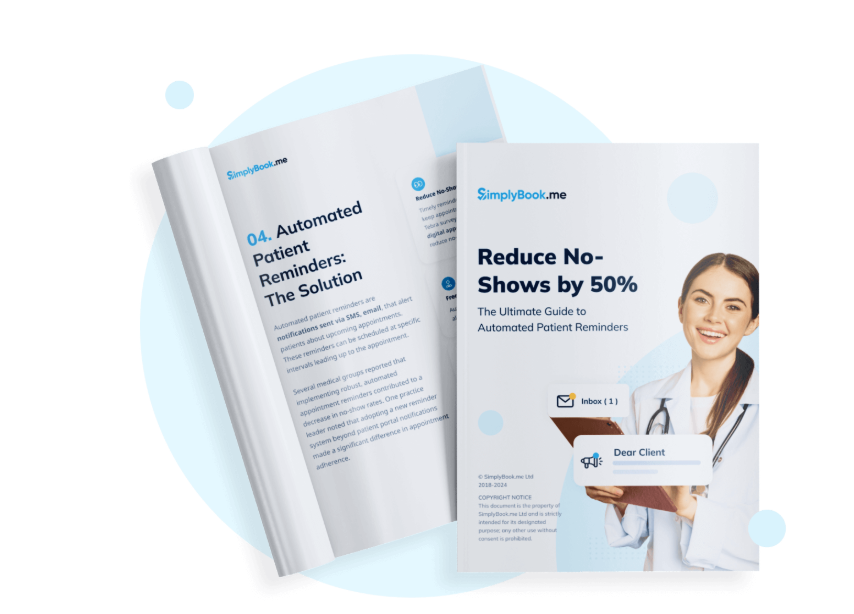
At their core, automated reminders are digital notifications, sent via SMS, email, phone, or app, that prompt patients about upcoming appointments.
But beneath their simplicity lies a sophisticated engine built into clinic scheduling software.
These systems don’t just send reminders; they synchronize with patient management databases, appointment calendars, and even billing systems to maintain a live, accurate view of clinic activity.
When a new booking is made, the system automatically schedules reminder messages at preset intervals, such as three days before and again a few hours in advance.
If a patient cancels, the software can instantly offer that slot to someone on a waitlist, eliminating gaps without human intervention. The result: tighter scheduling, smoother workflows, and fewer communication errors.


According to a 2025 report by Vozo Health, appointment no-show rates range from 12% to 80%, costing providers about $200 per missed visit.
Automated reminders via SMS, email, or phone help reduce no-shows by prompting patients to confirm, cancel, or reschedule.
This enhances patient engagement, optimizes scheduling, and improves clinic efficiency, making automated reminders essential for modern healthcare practices.
Healthcare providers, from small private practices to multi-location clinics, are rapidly adopting this technology.
With patient expectations rising and administrative resources stretched thin, automated reminders have become not just a digital convenience but a competitive necessity in modern medical practice.


Reduced No-Shows and Improved Attendance
Cutting Missed Appointments with Automated Reminders
One of the most tangible benefits of automated reminders is their ability to reduce no-shows. Clinics using SMS, email, or phone notifications have reported reductions in missed appointments by up to 40%. By keeping patients informed and engaged, these reminders ensure schedules stay full and clinics run smoothly.
Customizable Timing for Maximum Impact
Automated reminder systems allow clinics to tailor the timing of notifications to fit their workflow and patient behavior. Whether it’s a 24-hour heads-up or a same-day nudge, these messages can be scheduled at multiple intervals, ensuring patients have ample notice and opportunities to confirm their attendance.
Follow-Up Workflows for Unconfirmed Bookings
The system doesn’t stop at the first reminder. If a patient doesn’t respond, follow-up messages are triggered automatically. Some platforms even escalate notifications or offer rescheduling options, further reducing the risk of empty slots.
By cutting no-shows, automated reminders contribute directly to steadier patient flow, fewer scheduling gaps, and more predictable revenue, benefits that ripple through the clinic’s operational and financial health.

Lifting the Administrative Load
Reducing Manual Outreach
Automation removes the need for staff to spend hours making reminder calls or sending messages. This drastically cuts the administrative burden, freeing teams from repetitive, time-consuming tasks while maintaining consistent communication with patients.
Saving Time and Reducing Errors
Manual appointment reminders are prone to human error, missed calls, wrong numbers, or inconsistent messaging.
Automated systems eliminate these pitfalls, ensuring every patient receives accurate, timely reminders without additional oversight.
According to the Medical Group Management Association (MGMA), nearly 90% of healthcare leaders report using automated appointment reminders.
These systems significantly reduce staff time spent on manual outreach, cut errors like missed or wrong calls, and improve communication consistency.
MGMA highlights that automation frees staff to focus more on patient care and quality initiatives, leading to measurable improvements in operational efficiency and practice management.
Refocusing Staff on Patient Care
With administrative tasks offloaded, staff can redirect their attention to higher-value work, like patient support, clinical preparation, or quality improvement initiatives.

Smarter Scheduling Through AI and Software Integration
AI-Powered Optimization in Clinic Scheduling
Modern clinic scheduling software increasingly leverages AI to optimize appointment management. By analyzing provider availability, appointment types, and patient preferences, these systems intelligently allocate slots to maximize efficiency and minimize conflicts.
According to a 2025 article from IT Medical, AI-driven scheduling reduced patient wait times by 71% and increased utilization of key equipment like CT and MRI machines, highlighting significant operational improvements.
Instant Rescheduling and Slot Refilling
When cancellations occur, AI-driven reminders can automatically trigger rescheduling or fill the open slot with another patient from a waitlist. This real-time adjustment keeps the calendar full, reduces idle time, and ensures that providers’ schedules remain productive.
Maximizing Utilization and Minimizing Wait Times
The dual benefits are clear: clinics increase provider utilization while patients enjoy shorter wait times and a more predictable appointment experience.
AI ensures that every hour of clinic time is used effectively, creating smoother operations and higher patient satisfaction.
Real-World Impact
Clinics employing AI-enhanced scheduling report measurable gains: fewer empty slots, improved capacity use, and stabilized revenue streams.
Patients benefit from timely appointments, while staff experience less stress managing the daily schedule.

Multichannel and 24/7 Communication for Better Engagement
Reaching Patients Where They Are
Automated reminders operate across multiple channels, SMS, email, voice calls, and app notifications, allowing patients to receive updates in their preferred format.
A 2025 report from Artera highlights that 89% of patients engage more with recognizable phone numbers, and 66% say such messaging improves appointment attendance. This multichannel approach increases engagement and helps ensure reminders aren’t missed.
Around-the-Clock Availability
Unlike traditional phone calls, automated systems work 24/7. Patients receive timely notifications even outside office hours, preventing last-minute no-shows and improving overall adherence to scheduled visits.
Empowering Patients
Beyond reminders, patients can confirm, cancel, or reschedule appointments with ease.
This level of control not only enhances the patient experience but also streamlines clinic workflows, reducing administrative delays and improving operational efficiency.
Smoother Workflows and Accessibility
With multichannel delivery available at all times, clinics operate more smoothly each day.
Staff spend less time coordinating schedules manually, while patients benefit from a reliable, convenient system that keeps appointments on track.
Summary Table: Key Benefits of Automated Reminders in Clinic Scheduling
| Benefit | Description |
| Reduces no-shows | Cuts missed appointments by up to 40%, ensuring steady patient flow |
| Lowers admin burden | Frees staff from manual reminder calls, increasing focus on patient care |
| Optimizes scheduling | AI-powered tools reduce conflicts and fill gaps efficiently |
| Multichannel communication | Sends reminders via SMS, email, calls, or apps to suit patient preferences |
| 24/7 availability | Operates beyond office hours for timely engagement |
By bringing these benefits together, automated reminders help clinics work more efficiently and reduce daily disruptions.

The Bigger Picture: Building a Consistent Patient Experience
Automation does more than fill schedules; it builds trust. Patients experience consistency, professionalism, and timely communication, all of which contribute to satisfaction and retention.
When reminders arrive reliably and allow for easy confirmation, rescheduling, or cancellation, patients feel cared for rather than managed by a system.
Clinics also benefit from staying compliant. Modern clinic scheduling software adheres to privacy and data protection standards, including HIPAA, ensuring patient information is secure while maintaining efficient workflows.
In practice, automated reminders improve reliability and patient communication, leading to stronger long-term relationships.
Conclusion: The Future of Clinic Scheduling Is Automated
Missed appointments, administrative overload, and scheduling conflicts are no longer unavoidable frustrations; they’re challenges that modern clinics can solve.
Automated reminders, embedded within advanced clinic scheduling software, facilitate communication, optimize provider time, and keep patients engaged and informed.
Reducing no-shows and staff workload, it allows for smarter scheduling and better patient experiences.
Beyond efficiency, automation signals professionalism and reliability, building trust that strengthens patient relationships and encourages retention.
As healthcare evolves, clinics that adopt smart automation gain stability, more reliable revenue, and more time to focus on patient care.
The future of medical clinic scheduling is clear, and it runs on automation.
Keep your clinic running smoothly, set up automated reminders with SimplyBook.me, and make missed appointments a thing of the past.

Frequently Asked Questions (FAQ)
1. What are automated reminders for clinics?
Automated reminders are digital notifications, via SMS, email, phone, or app, that alert patients about upcoming appointments. Integrated with clinic scheduling software, they reduce no-shows, improve attendance, and streamline medical clinic scheduling.
2. How do automated reminders improve clinic efficiency?
By sending timely notifications and follow-ups, automated reminders minimize last-minute cancellations, optimize provider schedules, and reduce administrative workload. Staff can focus on patient care rather than manually managing appointments, improving overall clinic scheduling efficiency.
3. Can automated reminders be customized?
Yes. Clinics can set reminder timing (e.g., 24 hours before, same-day alerts), choose communication channels, and create follow-up workflows for unconfirmed bookings. This ensures patients receive messages in the way that works best for them, enhancing patient engagement.
4. Do automated reminders integrate with existing scheduling software?
Most modern clinic scheduling software, including SimplyBook.me, seamlessly integrates with patient management systems, calendars, and billing tools. Reminders are automatically sent whenever appointments are booked, canceled, or rescheduled, keeping medical clinic scheduling smooth and reliable.
5. Are automated reminders HIPAA-compliant?
Yes. Leading automated reminder systems comply with HIPAA and other data privacy standards, ensuring patient information is secure while maintaining efficient communication.
6. What are the benefits for patients?
Patients receive timely notifications, can confirm or reschedule appointments easily, and enjoy a smoother, more reliable clinic experience. This improves satisfaction and strengthens long-term engagement with your practice.
References:
Vozo Health. (2025, June 2). Automated appointment reminders: Why it matters in 2025? Retrieved from: https://vozohealth.com/automated-appointment-reminders-why-it-matters-in-2025
Medical Group Management Association (MGMA). (2019, February 27). Automated appointment reminders lead to fewer no-shows. Retrieved from: https://www.mgma.com/resources/operations-management/automated-appointment-reminders-lead-to-fewer-no-shows
IT Medical. (2025, August 7). Optimizing patient scheduling with AI algorithms. Retrieved from: https://itmedical.com/optimizing-patient-scheduling-with-ai-algorithms
Artera. (2025, September 9). Trends in patient engagement report 2025. Retrieved from: https://artera.io/trends-in-patient-engagement-report-2025
RiseApps. (2025, July 8). What is the cost of AI in healthcare in 2025? Retrieved from: https://riseapps.co/blog/cost-of-ai-in-healthcare